The Neighbourhood Boundary in Your Head
The neighbourhood boundary in your head can differ from a neighbour’s. Learn how shared routines, local customs and gathering places shape a sense of belonging.
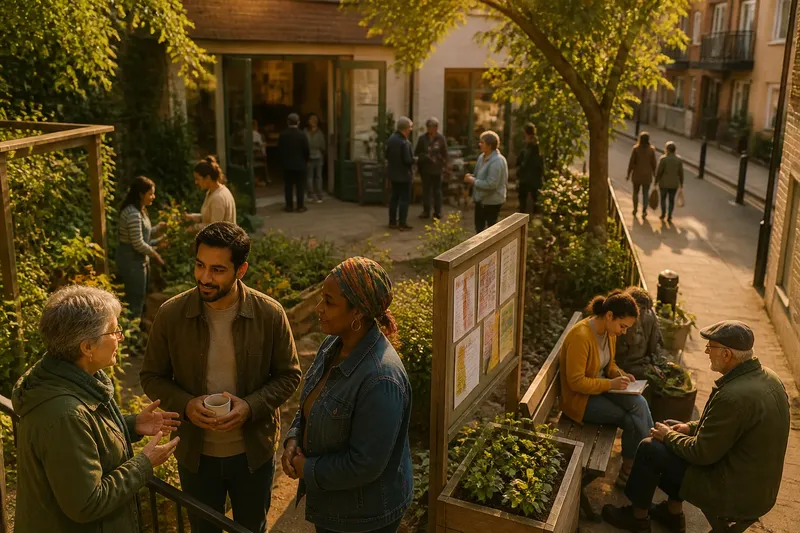
You’re stacking chairs after a residents’ meeting when someone asks which streets count as the neighbourhood. One person names the streets covered by the residents’ group; another includes the nearby blocks where they know people. The neighbourhood boundary in your head reflects more than an outline: it can express who shares responsibility, customs and a sense of belonging.
Shared responsibilities shape who feels included
A residents’ association, tenants’ group or community centre may serve a defined patch. That patch helps organisers decide whom to invite, where to hold a meeting and which concerns to raise. But an administrative or membership boundary does not settle who feels connected to the place.
Some people may take part without living inside the group’s usual area: they volunteer at its events, use a shared facility or care for someone nearby. Others may live within the boundary but have little contact with its activities. Both situations matter when a group discusses who should be heard.
Make the purpose explicit. If a meeting concerns a service’s remit, use the relevant service area. If it concerns a gathering open to neighbours, say whether people from adjoining streets are welcome. A clear invitation prevents a working boundary from being mistaken for a judgement about belonging.
Local customs can welcome people or leave them guessing
Neighbourly customs often live in small gestures: leaving a note before a shared hall is used, taking turns to water a communal planter, or asking before putting a notice on a shop window. These habits help people coordinate. When they remain unspoken, newcomers may not know how to join in.
Explain customs in plain language, especially when they affect access or shared work. A notice beside a community garden might say who can use the tools, where to return them and whom to ask about a broken handle. This is more welcoming than expecting everyone to learn the rules by watching from the edge.
Customs should also be open to discussion. A tradition that once suited a small group may not suit neighbours with different schedules, mobility needs or languages. The question is not whether a custom is old or new, but whether people can understand it, take part safely and suggest a workable change.
Gathering places make belonging visible
A library meeting room, church hall, café or sheltered bench can become a shared point of reference without creating a single, agreed neighbourhood outline. People may meet there for a repair session, a parent group or a seasonal celebration. The place matters because people can encounter one another, not because it proves that every nearby street belongs to one community.
Access affects who can join. Organisers can check whether the venue has step-free entry, clear signs, suitable seating and a way to ask questions before attending. If a familiar venue is difficult for some residents to reach, rotating locations or using a more accessible public room may broaden participation.
Imagine a tenants’ group planning a Saturday clean-up at a courtyard. Its usual meeting room is upstairs, and one volunteer cannot use the stairs. The group asks the housing office for a ground-floor room, updates the notice with the new location and invites residents from the adjoining block because they share the courtyard. The observable result is a clearer invitation and a place the volunteer can enter; the trade-off is that organisers need to confirm the room booking and let everyone know about the change.
How can a local group make its boundaries clearer?
Who should be invited to a neighbourhood meeting?
Start with the meeting’s purpose and name the streets, service users or groups it concerns. If nearby residents may be affected, explain whether they are welcome to attend or contribute.
How can newcomers learn local customs?
Write down the practical rules for shared spaces and explain them where people will see them. Invite questions without treating unfamiliarity as a lack of care for the community.
What if residents disagree about where the neighbourhood ends?
Ask what decision depends on the boundary, then separate that practical question from people’s personal sense of belonging. A service area may need a precise limit, while a social gathering can often include neighbours from beyond it.
How can a gathering include people who cannot attend in person?
Offer a simple way to contribute beforehand, such as a paper note at a local library or a contact email on the invitation. Share the outcome afterwards so people who could not attend can still understand what was discussed.
Make each boundary fit the decision
A short discussion before planning can keep a group from using one outline for every purpose. Check these points, then choose an action that fits what you observe:
- Check the purpose: If the issue concerns a service with a defined area, use that service’s published boundary; if it concerns a social event, state who is invited and welcome adjoining streets where appropriate.
- Check who is affected: If a decision changes access to a shared space used by nearby residents, invite those residents to comment; if they are not affected, explain the narrower scope and how to raise a later concern.
- Check the venue: If the room has stairs or unclear access, contact the venue about an accessible option; if no suitable room is available, share another way to take part and record that access remains unresolved.
- Check the invitation: If it names only a group or street without explaining eligibility, add plain wording about who can attend; if the invitation is already clear, share it through another local channel as well.
- Check local customs: If a shared-space rule is known only by regular users, write it down and display it nearby; if the rule causes a practical barrier, discuss a change with the people who use the space.
- Check how decisions are shared: If absent residents have no way to hear the outcome, post a brief update in an agreed public place or send it through the group’s usual channel; if the outcome is already accessible, invite corrections before acting on disputed details.
The neighbourhood boundary in your head can remain personal while a group makes its practical limits clear. State what a boundary is for, explain who can participate and leave room for neighbours to describe their own connection to the place. That small distinction helps a local decision include the people it will touch without pretending that one line defines everyone’s community.