Why a Public Bench Changes the Pace of a Street
A public bench can make a familiar route feel more legible and welcoming. Learn how visibility, orientation and proximity shape a useful pause.
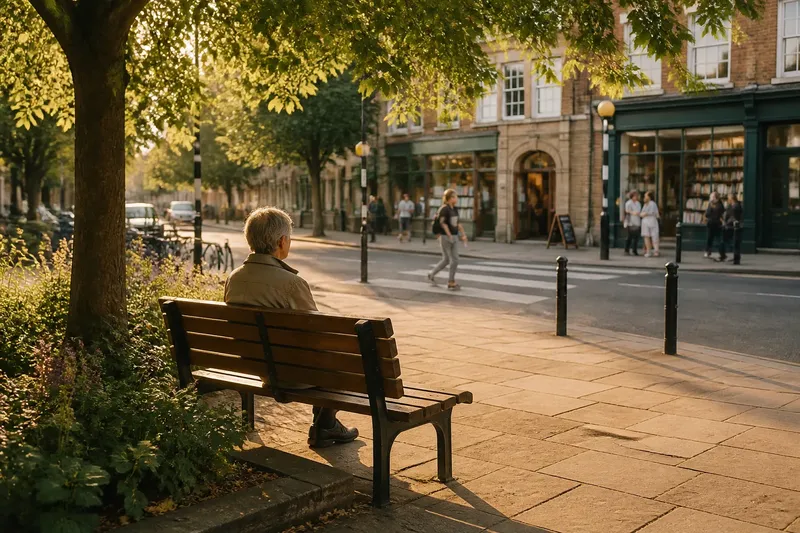
You are halfway along a familiar street when a public bench appears beneath a tree, facing the pavement rather than the road. The route has not changed, but its pace has: there is now somewhere to stop, look around and decide what comes next. A bench can turn a passage into a place without making the street feel like a destination.
Its effect depends less on the bench alone than on three design details: what a seated person can see, which way the seat faces and what lies within easy reach. Those choices suit different streets and different people. Notice them together, and a bench becomes easier to judge than by appearance or style.
Visibility makes a pause feel connected
A bench beside a blank wall may offer quiet, but it can leave a seated person feeling cut off from the street. A position with a view of the pavement, a crossing, shopfronts or a busy entrance keeps the pause connected to ordinary street life. The view need not be dramatic. Seeing people approach and pass can make it easier to feel oriented.
Visibility works both ways. A seat clearly seen from the path is easier to find, and someone waiting there is less likely to seem hidden from view. But a highly exposed spot can feel uncomfortable for a person who wants a little privacy, or for anyone sitting near fast traffic. A tree, low planting or building edge can soften the setting while leaving a clear line of sight to the route.
Think about what matters from sitting height, not just from the pavement. A sign may be hidden behind a tree canopy; a bus stop may be visible only from one end of the seat. If a person needs to keep an eye on a companion, doorway or arriving service, the view should support that ordinary purpose. The useful question is not simply, “Can I see the street?” It is, “Can I see what I came here to see?”
Orientation sets the street’s social tone
A seat facing the street invites its user to watch the passing scene. That can suit a high street, a walking route or a spot beside a junction where people may want to observe before crossing. A bench turned towards a garden, view or sheltered courtyard offers a more inward pause. Neither arrangement is automatically better; each gives attention a different place to land.
Orientation also shapes how easy it feels to share the seat. A long bench facing a path can make brief company possible without requiring conversation. Seats angled towards one another encourage interaction, though some people may prefer not to face strangers directly. Two benches set at a slight angle can offer a middle ground: people can talk, sit together quietly or look outwards.
Consider the likely use of the street. Near a library, clinic or local service, visitors may value a seat that lets them keep the entrance in view. Along a waterside route, facing the view may be the main point. At a busy corner, a side-on position can offer a view of movement without placing the seated person squarely in its flow. Small changes in direction can alter whether a bench feels watchful, sociable or restful.
Proximity makes the pause practical
A bench that is close to a destination can help someone break up a short errand. Near a bus stop, it may serve a person waiting for a ride; near a shop, it can give a companion somewhere to sit while another person goes inside. These positions make a pause useful because the next action is still close at hand.
But closeness has limits. A seat placed directly in a doorway’s path can obstruct people entering and leaving. Beside a narrow pavement, it may leave too little room for others to pass. Near a road, the sound and movement can dominate the pause. The best location keeps a bench connected to a useful destination while leaving the route clear and giving seated people a comfortable degree of separation.
Nearby details count, too. A tree can provide shade; a lamp can make an evening stop easier to see; a litter bin can reduce rubbish on the ground. Yet each addition should serve the bench’s purpose rather than crowd it. A seat beside a path to a playground, for instance, may help a carer stay close while keeping the play area in view. The same position might be less appealing to someone seeking a quiet rest.
Choose the arrangement that suits the street
Three broad approaches are worth comparing. They are not fixed types of bench, but different ways to arrange a pause within the street.
- Street-facing and visible: Best suited to routes where people want to watch activity, check directions or wait near a crossing. It works well when the pavement has enough room and the seat is not pressed against traffic.
- View-facing and slightly set back: Suits parkside edges, quiet lanes and places with a valued view. It gives a pause its own focus, though a person may feel less connected to nearby activity if the seat turns away from the route.
- Paired or angled seats: Useful where neighbours, companions or visitors may want to talk while keeping some personal space. This arrangement needs enough room to avoid narrowing the path or creating an awkward pocket people must walk around.
Say a council is considering a bench beside a neighbourhood library entrance. If visitors often wait for someone inside, a visible seat angled towards the doorway may suit them better than one facing away towards a planted strip. If the entrance is crowded, moving the seat slightly to the side could preserve a clear path while keeping the doorway in view. The observable difference would be whether waiting people can see the entrance without standing in the flow of arrivals.
To choose, begin with the reason people might pause there. Then ask what they need to see, whether they are likely to sit alone or with someone, and how close they need to remain to the next stop. Finally, look at the space around the proposed seat from a seated person’s perspective. A quick visit at different times of day can reveal whether the spot is exposed, busy or shaded when it matters.
Which bench position works best?
Should a public bench face the street?
It often makes sense where people need to watch a crossing, find a destination or feel connected to passing activity. A view of the street is less useful if traffic noise or a cramped pavement makes the seat uncomfortable.
Is it better to put a bench beside a busy entrance?
Nearness can help someone waiting for a companion or service, provided the seat does not block people coming and going. A position just off the main path can preserve the connection without turning the entrance into an obstacle.
Do benches need to face each other?
Facing seats can make conversation easier, but direct eye contact is not what every visitor wants. Angled seats let people talk while sharing a view or looking towards the path.
How can I judge whether a bench is well placed?
Imagine sitting there and checking what you can see, what is within reach and how easily others can pass. A useful position supports a real pause without making the street harder to use.
A public bench changes a route through its small invitation to stop, but the invitation works only if the setting makes sense to the person sitting down. When judging a public bench, look beyond whether it is present: notice its visibility, orientation and proximity together. The best place to pause is often the one that lets someone rest without losing their bearings or their connection to the street.